



Rapamycin, an immunosuppressant used to prevent rejection of transplanted organs, is not effective for treating mitochondrial diseases as previously thought
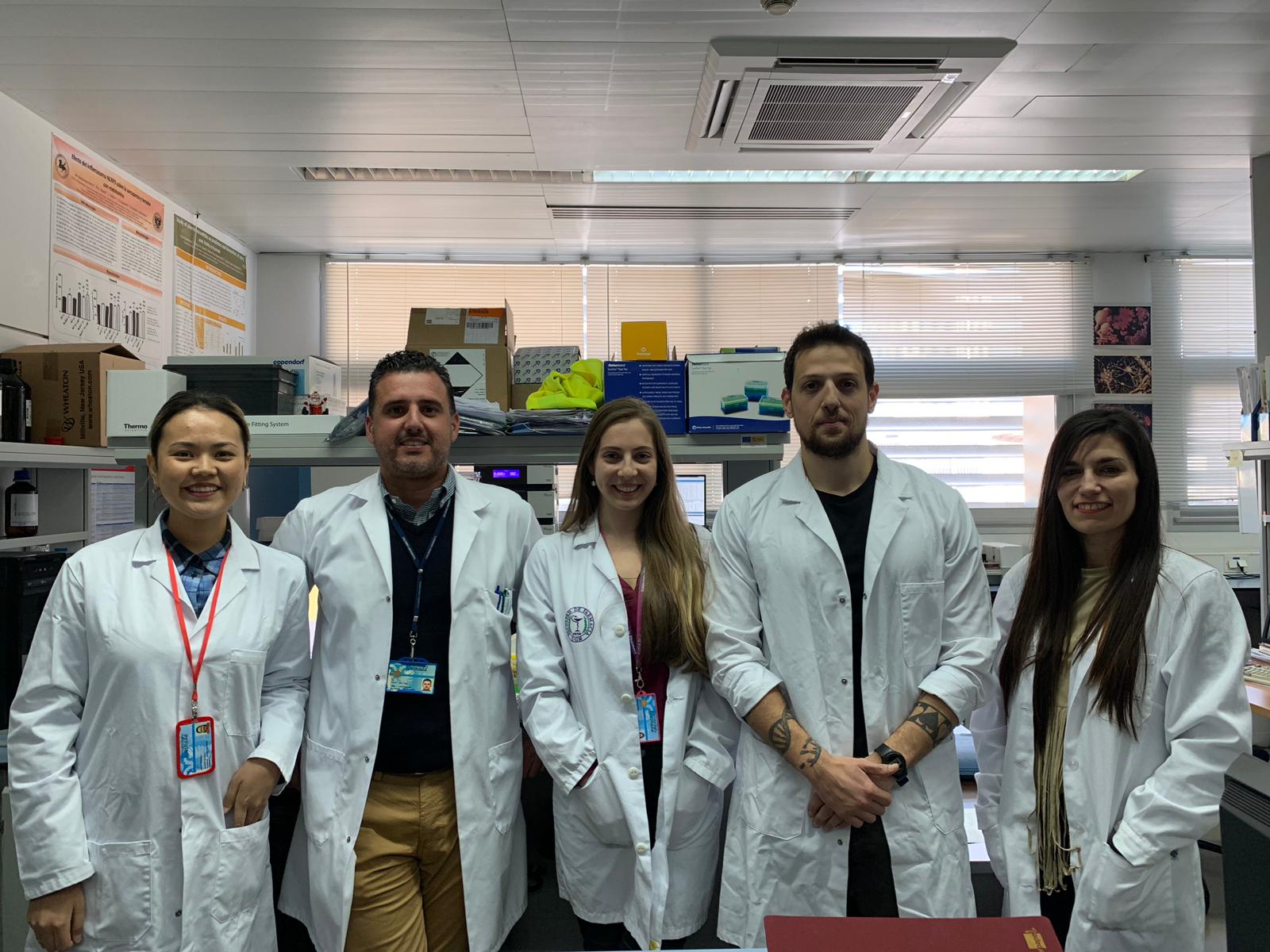
Researchers from the IBS GRANADA research group on intercellular communication have determined that, contrary to what was previously thought, rapamycin or sirolimus (an immunosuppressive drug used to prevent the rejection of transplanted organs and whose anti- proliferative may also be useful in cancer) is not effective for the treatment of widespread mitochondrial diseases.
Mitochondrial diseases are classified as "rare diseases" but, overall, they constitute the most common congenital metabolic disorders. In most cases, there are no effective treatments for these diseases, and patient care is limited to palliative care.
Just five years ago, a preclinical study was published showing very promising data regarding the use of rapamycin for the treatment of mitochondrial diseases. The study, however, did not identify the mechanisms of action of this drug and, despite being therapeutically relevant in a specific type of mitochondrial disease, it was unknown whether its potential application could be extended to other mitochondrial diseases, regardless of the mutation or defect. molecular cause.
In this study, published in the journal eBiomedicine, researchers have evaluated the effect of rapamycin in a different model of mitochondrial disease caused by a mutation in the gene coq9, which produces a severe lethal encephalopathy.
No therapeutic effect
In contrast to the initial study, rapamycin (both at low and high doses) did not exert any therapeutic effect in the encephalopathic model, contrary to expectations. Despite the fact that rapamycin acted on its cellular target, the mTORC1 protein complex, and induced profound changes in gene expression and in lipid and nucleotide metabolism, mitochondrial function continued to be highly compromised, maintaining the most important pathological characteristics in the brain. and, therefore, having no effect on survival.
This lack of therapeutic action of rapamycin may be due to the need to have minimum levels of Coenzyme Q or the inability to induce autophagy (a process in which the cell "eats" the damaged parts that no longer serve it) in this model.
In any case, this study is important for the possible clinical translation of the use of rapamycin in mitochondrial diseases, since it indicates the limitation of this therapeutic strategy for certain cases of mitochondrial diseases. Consequently, more studies are needed to advance the understanding of the effects of rapamycin in mitochondrial diseases and thus define the cases where it can exert a therapeutic benefit.
The experimental work for this study was largely carried out by Eliana Barriocanal, a researcher at ibs.GRANADA, who was hired under the Youth Guarantee program of the Regional Government of Andalusia (RGAD), in the CTS-101 group at the University of Granada. This research was also funded by the Isabel Gemio Foundation – Spanish Federation of Neuromuscular Diseases – FEDER Federation (TSR-1), and the Ramón y Cajal (RYC-2011-07643) and FPU programs.
Bibliographic reference:
Barriocanal-Casado E, Hidalgo-Gutiérrez A, Raimundo N, González-García P, Acuña-Castroviejo D, Escames G, López LC. Rapamycin Administration is not a Valid Therapeutic Strategy for Every Case of Mitochondrial Disease.eBiomedicine
Online access:
https://www.sciencedirect.com/


