



Researchers from Granada are leading a national study that identifies children with long QT syndrome who are at higher risk of heart complications.
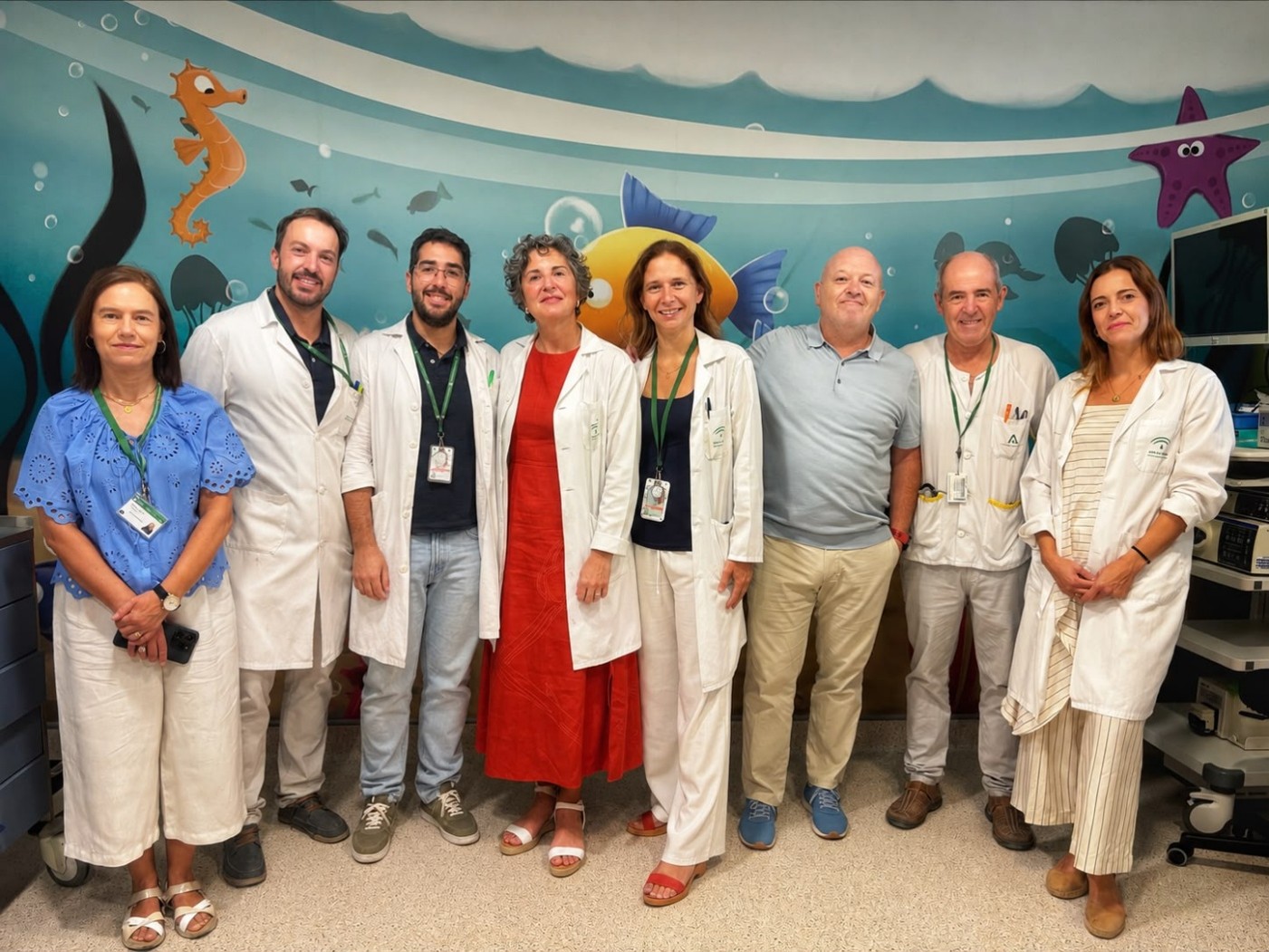
The multicenter research, coordinated from Granada by the MP05 Cardiovascular Diseases Group of ibs.GRANADA and the Virgen de las Nieves University Hospital, defines the main clinical and genetic factors associated with the risk of sudden death in childhood
Researchers from the ibs.GRANADA Biosanitary Research Institute and the Virgen de las Nieves University Hospital have once again placed Granada at the forefront of international cardiovascular research following the publication of one of the largest studies to date on long QT syndrome in pediatric age.
The work was led by Dr. Francesca Perin, a pediatric cardiologist at the Virgen de las Nieves University Hospital and a researcher at ibs.GRANADA, and coordinated by Dr. Juan Jiménez-Jáimez, principal investigator of the MP05 Group at ibs.GRANADA and head of the Arrhythmias and Electrophysiology section at the Granada hospital. Both are listed as corresponding authors of the study, which was conducted in Granada in collaboration with 30 Spanish hospitals, including the most prestigious pediatric arrhythmia centers in Madrid, Barcelona, A Coruña, and other cities. The research was recently published in the European Heart Journal, one of the leading international scientific journals in the field of cardiology.
The study gathers the experience of 371 children diagnosed with long QT syndrome, a genetic disease that predisposes to sudden death, during the last twenty years in the National Health System, constituting the largest Spanish pediatric registry of this genetic disease, one of the main causes of sudden death in apparently healthy children and young people.
Towards increasingly personalized medicine
One of the main findings of the study is that most children with long QT syndrome have a favorable outcome when they receive an early diagnosis and appropriate treatment with beta-blockers, medications that help reduce the risk of serious heart rhythm disturbances.
However, researchers have identified a small group of patients who are at significantly higher risk of serious arrhythmias and sudden death. Among the main factors associated with this increased risk are certain particularly aggressive genetic variants, a marked prolongation of the QT interval (a parameter measured by electrocardiogram), and the onset of disease manifestations during the fetal or neonatal period.
These results allow for more precise identification of children at higher risk of cardiac complications and enable the tailoring of treatment to each patient's genetic and clinical characteristics. Furthermore, the study confirms the fundamental role of beta-blockers as first-line treatment and provides new evidence on the benefit of other interventions in very high-risk patients, such as left sympathetic cardiac denervation, a technique that reduces the influence of the nervous system on the heart, and the implantation of a defibrillator, a device capable of detecting and treating serious heart rhythm disturbances.
Granada, a national and international leader in pediatric arrhythmias
The scientific coordination of the study from Granada highlights the role of the MP05 Group at ibs.GRANADA as one of the leading international groups in the study of channelopathies, inherited heart disease, and the prevention of sudden death. For years, the group has been conducting translational research that integrates genetics, clinical cardiology, electrophysiology, and precision medicine, participating in international networks and leading collaborative projects at the national and international levels. Furthermore, the group is a regional leader in pediatric arrhythmology, serving as a referral center for the diagnosis and treatment of children with inherited heart rhythm disorders in Andalusia.
The study's first author, Dr. Francesca Perin, emphasizes that "this national registry demonstrates that most children with long QT syndrome can have a good prognosis when the disease is diagnosed early and they receive appropriate treatment. Furthermore, it has allowed us to define more precisely which patients are at higher risk and require more intensive monitoring and treatment."
Dr. Juan Jiménez-Jáimez states, “This study demonstrates the great value of inter-hospital collaboration and confirms that knowing each child’s genetic profile allows us to offer increasingly personalized and safe treatments. Since these are rare diseases, it is crucial to have information from different centers to draw reliable conclusions. Our ultimate goal is to help identify high-risk patients early on, thereby reducing the likelihood of affected children suffering serious arrhythmias or sudden death.”
Bibliographic reference
Perin, F., Cartón, AJ, Bermúdez-Jiménez, FJ, Fernández-Barrio, BC, Esmel-Vilomara, R., Marcos-Fuentes, L., Rueda Nuñez, F., Rodríguez Vázquez del Rey, M. del M., Montañés Delmás, E., Ayerza-Casas, A., Fernández-Tudela, B., Viadero, MT, Castro, F., Siles, A., Blanca-Jover, E., Caravaca-Pantoja, L., Bueno-Gómez, A., Salamanca-Zarzuela, B., De Vera McMullan, P., … Sarquella-Brugada, G. (2026). Pediatric long QT syndrome: clinical outcomes and therapy in the Spanish National Registry. European Heart Journalhttps://doi.org/10.1093/eurheartj/ehag513
About the group
The MPE-05 Translational Research Group in Cardiovascular Diseases at ibs.GRANADA conducts multidisciplinary and translational research aimed at improving the diagnosis, prevention, and treatment of cardiovascular diseases. Its main lines of research encompass heart failure, arrhythmias, sudden cardiac death, and hereditary heart disease, as well as the study of the genetic, nutritional, and psychological factors that influence their development and progression. The group also investigates new therapeutic strategies, cardiovascular intervention techniques, and multidisciplinary care models, with a particular focus on secondary prevention and improving patients' quality of life.
More information: https://www.ibsgranada.es/grupos-de-investigacion/mpe05-cardiologia/


