



They discover new mechanisms that can improve the diagnosis of patients with lymphoma
Diffuse large B-cell lymphoma (DLBCL) is the most common subtype and one of the worst prognosis.
Research from the University of Granada has identified new mutations related to lymphoma that help to better understand how these tumors occur. The article, published in the journal Molecular Cancer, has been highlighted by the publisher Nature.
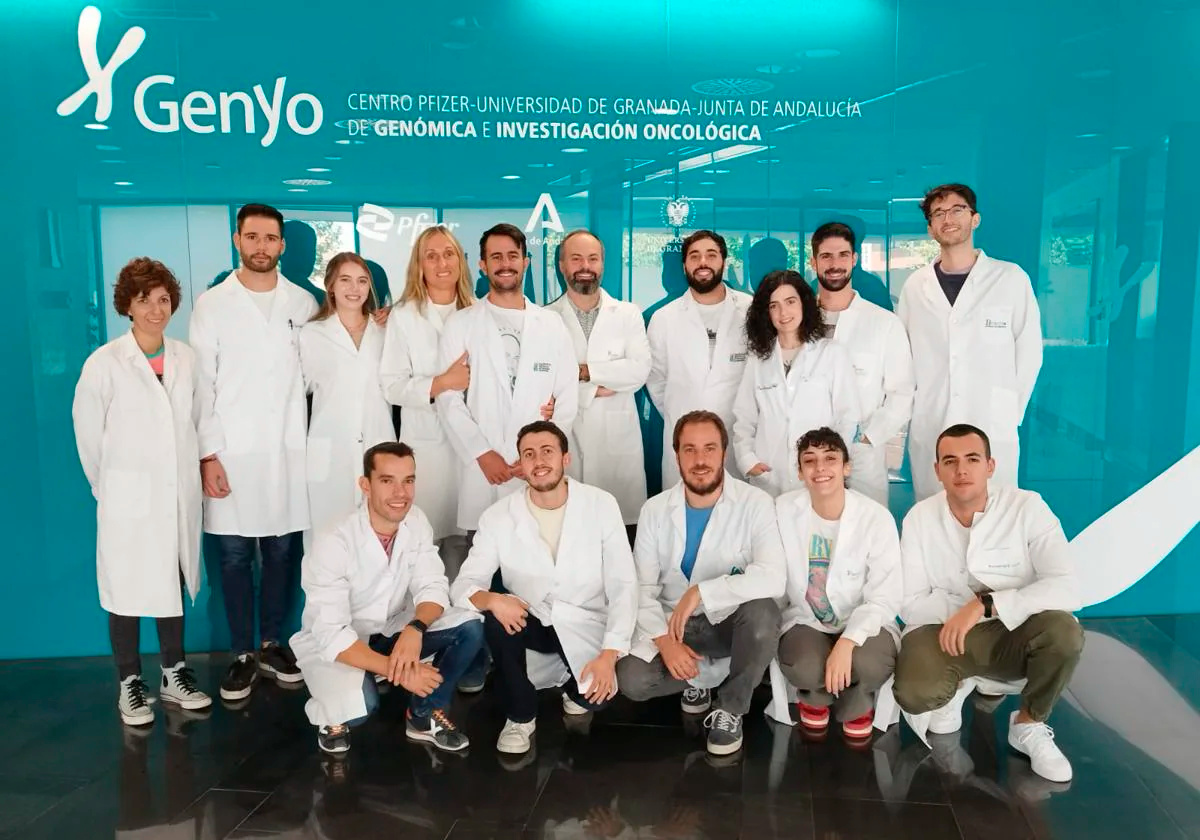
The study, in which the Biosanitary Research Institute of Granada (ibs.GRANADA) and the Pfizer-University of Granada-Junta de Andalucía de Genomics and Oncology Research Center (Genyo) participated, was carried out by the team of the professor of the UGR Pedro Medina Vico, professor of the Department of Biochemistry and Molecular Biology, and whose first author was the researcher Marisol Benitez Cantos, Together with Marta Cuadros, researcher in charge of the group Ae22-Cancer Genetics, Biomarkers and Experimental Therapies from ibs.GRANADA and professor in the Department of Biochemistry and Molecular Biology III and Immunology.
Lymphoma is a type of cancer that affects cells of the immune system called lymphocytes. Unlike leukemias, which are also produced by tumors in blood cells, lymphomas generate solid tumors that manifest in the lymphatic system. According to the Spanish Society of Medical Oncology, more than ten thousand new cases of lymphoma are diagnosed in Spain, with diffuse large B-cell lymphoma (DLBCL) being the most common subtype and one of the worst prognosis. DLBCL can affect people of any age, but usually occurs in older people. It is one of the most aggressive lymphomas and has the worst prognosis. About 35-45% of patients do not survive five years after their diagnosis.
The group's researchers Ae22-Cancer Genetics, Biomarkers and Experimental Therapies for which Professor Medina is co-responsible, have analyzed genetic data from more than 1.500 DLBCL patients, in search of information that may be related to the disease. Thanks to this, they have managed to observe an enrichment of mutations in specific regions of DNA called "cutting and splicing signals." Human genes have information stored in a somewhat particular way. This is because they encode it in a fragmented way, since there are regions that should not be read and must be cut and eliminated so that an adequate product can be generated. If these information splicings are not done precisely, functional products are not created, which can promote cancer.
Professor Medina's team has discovered that lymphocytes are especially vulnerable to these mutations in the cutting and splicing signals. This is because in immune cells there is a process called somatic hypermutation, which generates a series of controlled mutations directed at specific DNA sequences in antibody genes to improve their efficiency. These target-specific DNA sequences and the splicing signal sequences look alike, so if somatic hypermutation is done poorly, it can generate unwanted mutations that alter the function of genes important for lymphoma development.
The research, in addition to shedding light on the biology of lymphoma and how it starts from normal lymphocytes, can help improve the diagnosis of the disease. This is because genes important for the diagnostic and prognostic classification of lymphomas such as CD79B, SGK1, ETV6 or PIM1 suffer recurrent mutations in the cutting and splicing signals that had gone unnoticed in other previous studies. Furthermore, the finding of enrichment of mutations in splicing signals could open new therapeutic avenues, given that the Food and Drug Administration recently approved the use of capmatinib for certain tumors with mutations in splicing signals.
This research has been funded by the Ministry of Science, Innovation and Universities, the Spanish Cancer Research Association, the Junta de Andalucía and the Childhood Leukemia Research Classroom 'Héroes contra la Leukemia'.


