



They develop a new system that allows knowing the right dose of radiotherapy in people with cancer
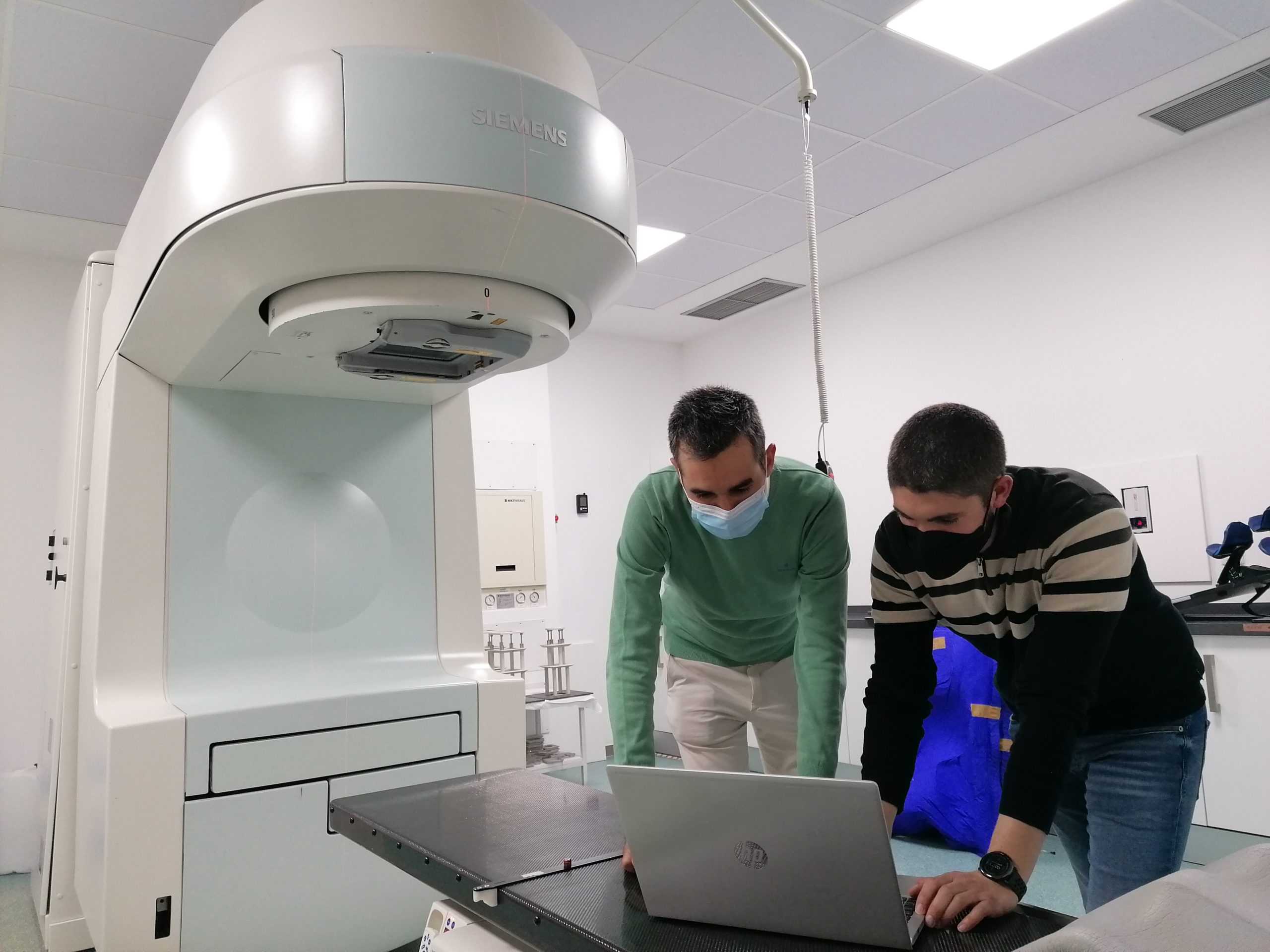
This technological development, published in the journal Medical Physics, may represent an advance in personalized radiotherapy treatment
The Medical Physics research group of the Biosanitary Research Institute of Granada (ibs.GRANADA) has managed to develop a technology through photodiodes and phototransistors that allows the dose of radiotherapy administered to the patient to be controlled, guaranteeing adequate treatment and minimizing damage to the patient. healthy tissue. This technology also contributes to economic savings, in addition to a lower investment of working hours by specialized personnel.
The treatment of cancer patients has three fundamental pillars, which are: surgery, radiotherapy and chemotherapy; as single or combined treatments. The proportion of cancer patients for whom radiotherapy is indicated is 52%, which reflects the enormous importance of this type of treatment in the management of this set of diseases.
In a radiotherapy program, irradiation must be administered with the right dose to correctly treat tumor tissues, but trying to avoid damage to healthy tissues. To ensure that this is the case, dosimetry is used. in vivo, which consists of the measurement of the dose actually administered to each patient in a treatment session; however many of these dosimetry systems live, They are economically expensive and require a lot of work time.
This team of scientists from ibs.GRANADA, in collaboration with the Department of Electronics and Computer Technology of the University of Granada, have developed their own prototype that uses photodiodes and phototransistors that detect radiation by altering its electrical characteristics. Through a measurement, reading and interpretation system developed by this translational research, they can know the exact dose of radiotherapy received by a cancer patient.
The novelty of this Granada study is the development of a dosimetry system in vivo much cheaper and that implies a lower dedication of working hours, without losing the reliability that other systems have. Without the collaboration between basic researchers from the University of Granada and hospital physicists from the San Cecilio Clinical University Hospital, the development of this technology would not have been possible.
About the research group
The ibs.GRANADA Medical Physics research group, led by Dr. Marta Anguiano Millán and Dr. Damián Guirado Llorente, is made up of physicists and engineers who work in the clinical field, known as hospital radiophysicists, and in the academic. The main objective of this team is the clinical application of the results obtained in its research work; particularly in the area of oncology. His main lines of research are dosimetry in radiotherapy, the development and application of radiation measurement equipment and computer simulation applied to relevant clinical problems, such as breast cancer screening and basic problems in the field of radiobiology.
More information about the group at https://www.ibsgranada.es/grupos-de-investigacion/a11-fisica-medica/
Bibliographic reference:
Ruiz-Garcia I, Román-Raya J, Banqueri J, Palma A, Guirado D, Carvajal MA.
Commercial photodiodes and phototransistors as dosimeters of photon beams for radiotherapy. Medical Physics 2021; 48(9):5440-7.


