



Scientists from ibs.GRANADA identify genes that could represent an advance in the treatment of obesity
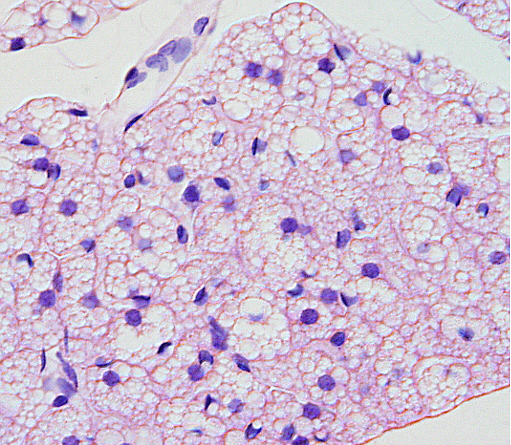
The study, published in the journal Scientific Reports, has identified a total of 107 candidate genes for the functioning of brown adipose tissue.
The Biomarkers of Bone and Metabolic Diseases research group of the Biosanitary Research Institute of Granada (ibs.GRANADA) have identified new genes potentially involved in the functioning and/or development of brown adipose tissue, which is a possible therapeutic target against obesity.
Brown adipose tissue (BAT) is a type of adipose tissue with a great capacity to oxidize glucose, lipids and dissipate energy in the form of heat, hence its potential usefulness against obesity and related disorders.
A group of scientists from ibs.GRANADA, the University of Granada, the University of Arizona and the Mount Sinai Hospital participated in this study. The researchers applied computational methods to predict new genes relevant to the metabolism of brown adipose tissue. To do this, they used a measure of biological distance that represents the probability that two proteins interact. The researchers selected those genes closest biologically to uncoupling protein 1, known as UCP1, a key marker for brown adipose tissue. In this way, they identified those genes with the greatest probability of interacting with UCP1 and, therefore, of being relevant for brown adipose tissue. Within that group of identified genes, 60 genes had already been associated with brown adipose tissue in previous studies, and 47 new genes were identified. The results of this study support the existence of 107 potentially relevant genes for brown adipose tissue.
This list of 107 candidate genes can serve to guide future research on the development and function of brown adipose tissue, which may help in its application as a therapeutic target against obesity.
About the research group
The ibs.GRANADA Biomarkers of Metabolic and Bone Diseases research group, led by Manuel Eduardo Muñoz Torres and Jonatan Ruiz Ruiz, is fundamentally dedicated to the identification of biomarkers and new therapeutic targets in prevalent pathologies. Its most important lines of research are the development of new diagnostic kits, clinical trials of antiosteoporotic and antidiabetic drugs, the application of new non-invasive techniques for the early diagnosis of bone fragility, the effect of antiosteoporotic drugs on the energy metabolism and the vascular system and the identification of potential inhibitory molecules of metabolic pathways involved in vascular complications in patients with diabetes.
More information about the group at https://www.ibsgranada.es/grupos-de-investigacion/mp20-biomarcadores-de-enfermedades-metabolicas-y-oseas/
Bibliographic reference:
Salazar-Tortosa, DF, Enard, D., Itan, Y., Ruiz JR Novel brown adipose tissue candidate genes predicted by the human gene connectome. Sci Rep 12, 7614 (2022). https://doi.org/10.1038/s41598-022-11317-2


